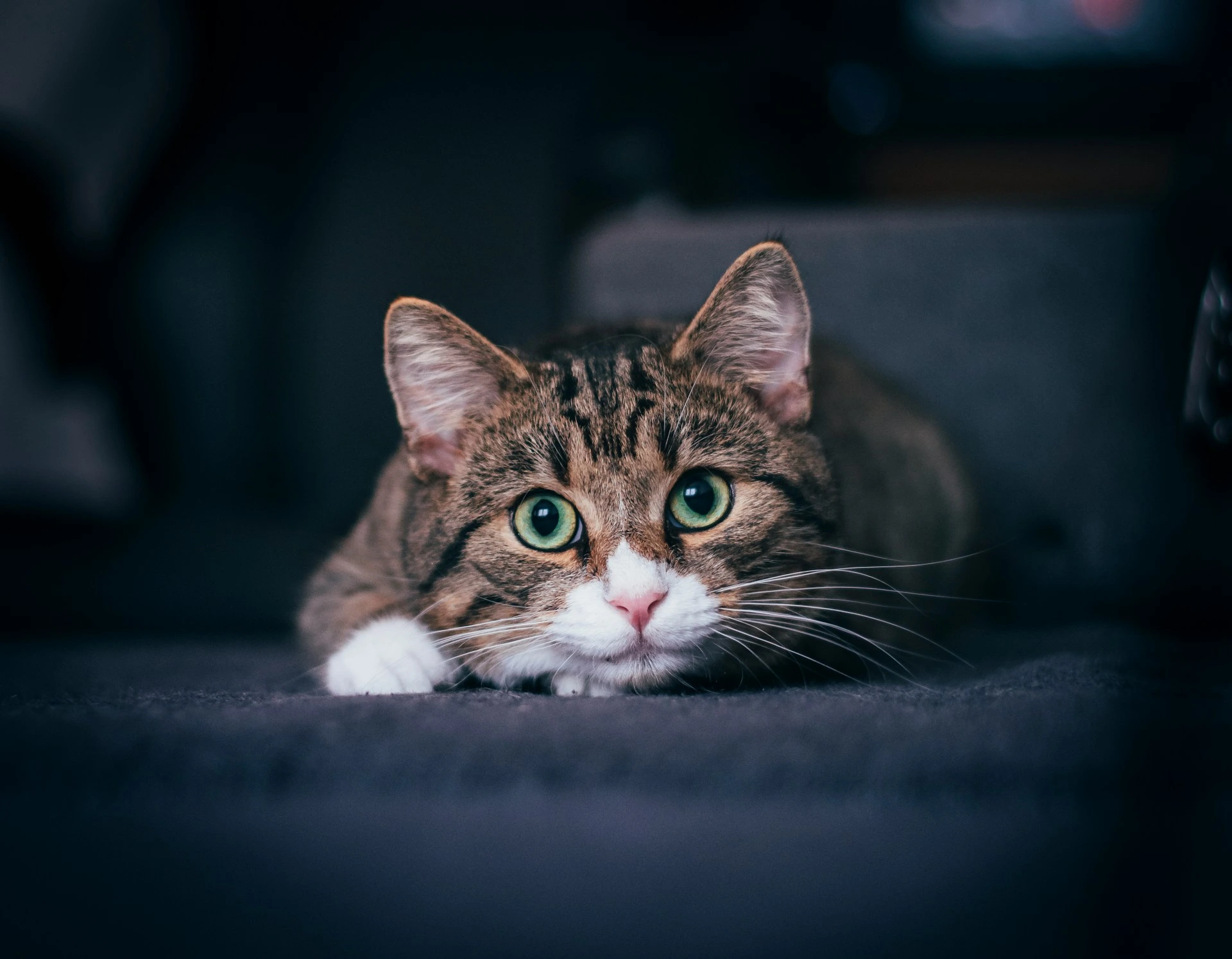


You are sound asleep when suddenly a paw taps your face, a loud meow echoes through the bedroom, or your feline overlord launches into a full-speed sprint across the house. If this sounds familiar, you are not alone. At Clermont Animal Hospital, your Clermont County veterinary clinic, questions about cat nighttime behavior are surprisingly common. Many cat owners find themselves wondering why their kitty seems determined to start the day hours before everyone else.
While these midnight wake-up calls can be frustrating, they are often rooted in normal feline instincts. Understanding why cats wake owners at night, recognizing the causes of cat zoomies after dark, learning strategies for managing nighttime cat activity, and discovering effective ways of stopping cats from waking you up can help both you and your cat enjoy a more restful night.
Cats have unique activity patterns that differ from those of people.
Unlike humans, cats are naturally crepuscular. This means they are most active during dawn and dusk. Historically, these times offered the best opportunities to hunt prey.
A cat’s nighttime behavior is often linked to its natural crepuscular instincts. Cats tend to be most active in the early morning and evening, which can lead to increased activity while their owners are trying to sleep.
Even though your kitty lives comfortably indoors, those instincts remain strong.
This explains why many cats become energetic just as you are heading to bed or preparing to wake up.
There is rarely a single reason behind nighttime wake-up calls.
Instead, several factors often contribute to the behavior.
Why cats wake owners at night often comes down to hunger, boredom, attention-seeking, excess energy, learned behavior, or natural activity cycles. In some cases, medical conditions may also play a role.
Understanding the motivation behind the behavior is the first step toward finding a solution.
Food is one of the most common reasons cats wake their owners.
If breakfast usually appears shortly after you wake up, your cat may begin trying to speed up the process.
Many cats quickly learn that waking their owner leads directly to food.
Over time, the behavior becomes reinforced.
Your feline friend may meow, paw at your face, or pace around the bedroom because they associate those actions with receiving a meal.
Cats are excellent observers and often develop routines based on predictable household patterns.
Sometimes your cat simply wants interaction.
Even negative attention can be rewarding from a cat’s perspective.
If your kitty wakes you and you respond by:
They may view the interaction as a successful outcome.
Many cats continue to wake their owners because the behavior consistently elicits attention. From your cat’s perspective, any response may reinforce the habit.
This is one reason why stopping cats from waking you up often requires consistency.
Many cat owners are familiar with sudden bursts of energy known as the zoomies.
One moment your feline companion is sleeping peacefully. Next, they are racing through the house at full speed.
Cat zoomies after dark are sudden bursts of energy that often occur because cats naturally become more active during dawn and dusk. These episodes are usually normal and reflect natural hunting instincts.
Zoomies may involve:
For most healthy cats, occasional zoomies are simply part of being a cat.
Indoor cats require regular mental and physical stimulation.
Without enough enrichment during the day, your kitty may save their energy for nighttime hours.
Signs that boredom may contribute to cat nighttime behavior include:
Cats that spend long periods alone during the day often benefit from additional enrichment opportunities.
A bored cat frequently creates their own entertainment.
Unfortunately, that entertainment sometimes happens at 3 A.M.
One of the most effective approaches to managing nighttime cat activity is increasing exercise before bedtime.
Cats naturally follow a hunt-eat-groom-sleep cycle.
Providing opportunities for play during the evening helps satisfy hunting instincts while encouraging physical activity.
Managing nighttime cat activity often starts with interactive evening play sessions. Physical and mental stimulation before bedtime can help reduce excess energy and promote more restful sleep.
Activities may include:
Aim for active play followed by a meal to mimic natural hunting behavior.
Cats thrive on predictability.
A consistent daily schedule can help regulate activity patterns and reduce nighttime disruptions.
Try to keep:
Over time, your cat may begin adjusting their activity levels to better align with household schedules.
Consistency often produces better results than frequent changes.
Although many causes of cat nighttime behavior are behavioral, medical conditions should not be overlooked.
Certain health concerns may increase nighttime activity or vocalization.
Examples include:
Sudden changes in a cat’s nighttime behavior may indicate an underlying medical condition. Veterinary evaluation is recommended when new behaviors develop unexpectedly or worsen over time.
Senior cats are particularly likely to experience medical issues that affect sleep patterns.
Older cats often experience age-related changes that influence behavior.
Some senior cats become more vocal at night or appear confused in the evening.
Potential contributing factors include:
A veterinary examination can help determine whether a medical issue may be affecting your cat’s sleep habits.
Early evaluation often allows concerns to be addressed more effectively.
Many owners wonder whether providing food overnight will solve the problem.
In some situations, scheduled feeding devices may help.
However, feeding your cat every time they wake you can unintentionally reinforce the behavior.
Feeding a cat each time they wake you may strengthen the habit. Consistent feeding schedules often work better than responding to overnight demands.
If hunger appears to be a major factor, discuss feeding strategies with your veterinarian.
The best solution depends on your cat’s age, health status, and lifestyle.
Changing established routines takes time.
Cats quickly learn patterns, but they also require consistency when learning new ones.
Helpful strategies may include:
Stopping cats from waking you up often requires a combination of increased daytime enrichment, evening exercise, predictable routines, and consistent responses to unwanted nighttime behaviors.
Temporary increases in attention-seeking may occur as new habits develop.
Patience is important during this process.
The sleeping environment can also influence behavior.
Consider:
Some cats settle more easily when they have designated sleeping areas away from household distractions.
Environmental adjustments can complement behavioral strategies.
PetMD explores Fluffy’s kitty zoomy habits in this post. Daily Paws also has a piece on cat zoomies.
Why cats often wake owners at night is often related to hunger, attention-seeking, boredom, excess energy, or natural feline activity cycles. Medical conditions can also contribute in some cases.
Yes. Cat zoomies after dark are usually a normal expression of energy and hunting instincts. Many cats experience brief periods of intense activity during dawn and dusk.
Managing nighttime cat activity often involves increasing evening exercise, providing enrichment, maintaining routines, and creating opportunities for mental stimulation throughout the day.
Stopping cats from waking you up typically requires consistency. Avoid reinforcing wake-up behaviors while providing adequate exercise, enrichment, and predictable feeding schedules.
Sudden changes in cat nighttime behavior may warrant veterinary evaluation, particularly in senior cats or when other symptoms are present.
Understanding cat nighttime behavior can help improve both your sleep and your cat’s quality of life. Whether you’re trying to determine why cats wake owners at night, dealing with frequent cat zoomies after dark, learning strategies for managing nighttime cat activity, or exploring options for stopping cats from waking you up, professional guidance can help identify the best approach.
Are you searching for a trusted vet near me in Clermont County? Clermont Animal Hospital provides comprehensive wellness care, behavioral guidance, and personalized recommendations designed to support your cat’s physical and emotional well-being. Schedule an appointment today and let our veterinary team help your feline companion develop healthier routines for day and night.
This blog is intended for informational purposes only. Always consult your veterinarian for personalized medical advice, diagnosis, behavioral recommendations, and treatment options for your pet.
If you would like to learn more about our Clermont County animal clinic, visiting our Service page is a great start. You’ll find more information about our premier pet clinic and the services we offer, including Wellness & Vaccinations, Emergency Care, Behavioral Counseling, and more.