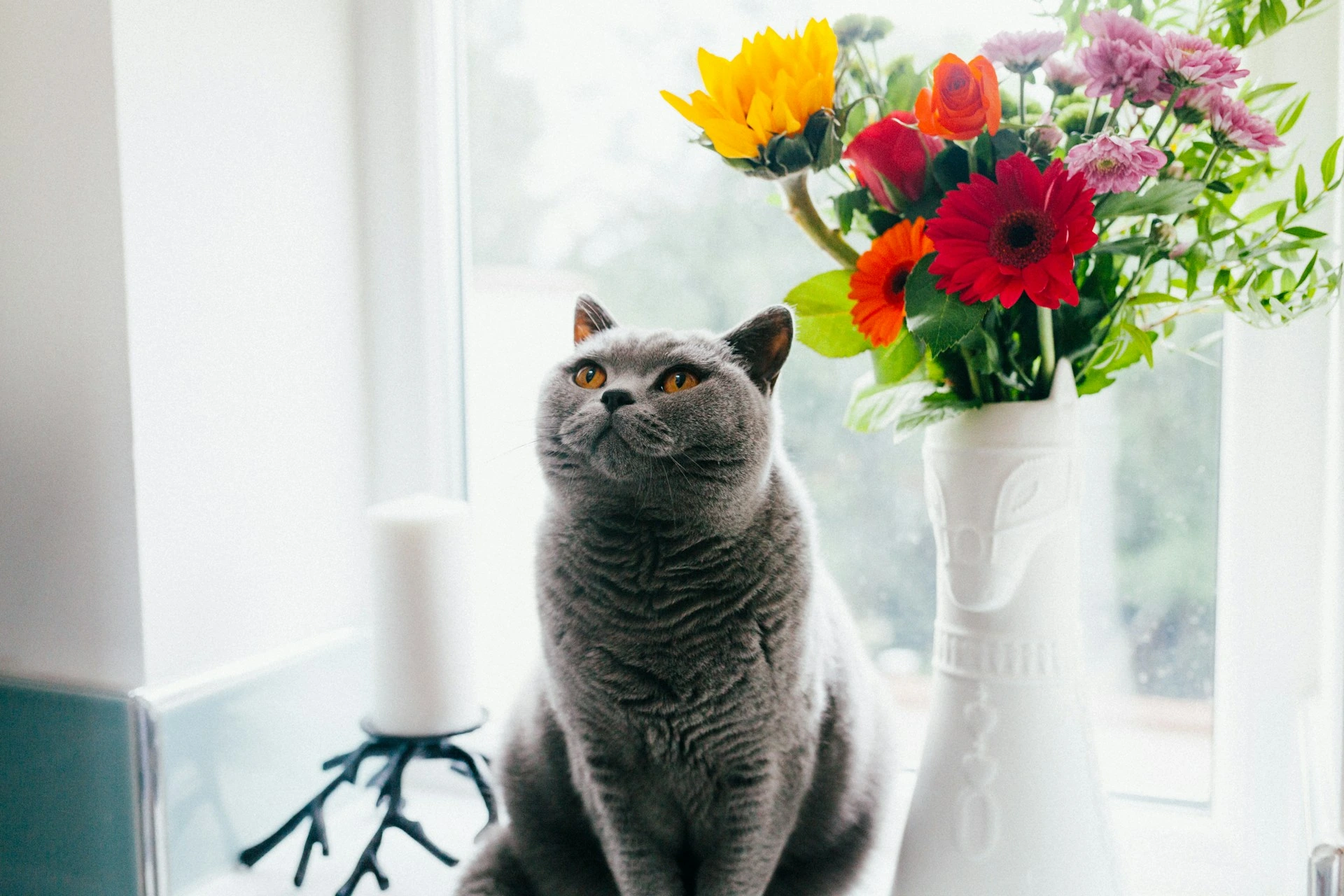


Crash. Clatter. Thud. Sound familiar? If you’ve ever locked eyes with your kitty as she slowly nudges your favorite mug off the counter, you might wonder if she’s plotting world domination, or just trying to get your attention. Here at Clermont Animal Hospital, we get lots of questions about why cats love to send our stuff flying. While it can be a bit exasperating to find your belongings scattered across the floor, rest assured: your furry friend isn’t just being naughty. There’s actually a perfectly logical (and very cat-like) reason behind this classic feline move.
Figuring out why your cat loves to send things flying can help you decode her mysterious ways and maybe even bring you closer together. Whether she’s channeling her inner hunter or just looking for a little extra attention, there are plenty of reasons Fluffy enjoys turning your countertops into her own personal playground. The silver lining? Once you know what’s driving this behavior, it’s much easier to keep both your cat and your knickknacks happy.
Cats are clever, curious little creatures, and they definitely see the world a bit differently than we do (and differently than their canine roommates, too). Those adorable paws aren’t just for looking cute. They’re actually super sensitive and help your kitty explore her surroundings.
When your feline pal spots something new, her first instinct is often to give it a good whack with her paw. The problem? Most of our stuff seems to end up right on the edge of counters, shelves, and tables—prime real estate for a curious kitty’s experiments.
Sometimes, your cat is just doing a little research—cat style! The way an object moves, the sound it makes, and even your reaction all add up to a fascinating sensory experience for your furry scientist.
A lot of these quirky cat habits make a whole lot more sense when you try to see things from your kitty’s point of view instead of your own.
Even the most pampered indoor cat retains many of the instincts of their wild ancestors.
In nature, cats use their paws to test prey before attempting to catch it. A quick swipe helps determine whether something is alive, dangerous, or worth pursuing.
So when your kitty sends a bottle cap or pen skittering across the counter, she’s really just practicing her hunting skills. The way the object moves is unpredictable, which makes it all the more exciting for your little predator.
Objects that roll, wobble, bounce, or make noise are particularly appealing because they mimic the unpredictable movements of prey.
So, your cat isn’t trying to drive you crazy. She’s just following instincts that have been hardwired into cats for thousands of years.
Sometimes the object itself is not the goal.
Many cats are quick learners and soon realize that sending something crashing to the floor gets your attention right away. Suddenly, you’re looking up from your phone, calling their name, or dashing across the room. Mission accomplished, as far as your kitty is concerned.
From your cat’s point of view, that little stunt worked like a charm.
Attention-seeking cat behavior can develop when a cat realizes certain actions reliably earn interaction. Even negative attention can reinforce the behavior because your feline companion still receives engagement.
Cats are nothing if not observant. If nudging your coffee mug toward the edge always gets a reaction, your feline overlord will remember and be happy to repeat the trick whenever she wants your attention.
Indoor cats need both physical exercise and mental stimulation.
If your cat doesn’t have enough chances to climb, explore, hunt, and play, she’ll often invent her own fun. Counters are like amusement parks for cats: great views, new smells, and plenty of things to bat around.
A bored cat is a creative cat, and sometimes a bit of a troublemaker, too.
Signs that boredom may be contributing to the behavior include:
Giving your kitty plenty of enrichment throughout the day can help keep her from inventing her own games with your household treasures.
Cats are surprisingly clever when it comes to figuring out cause and effect.
When they push an object and watch it fall, several things happen:
For many cats, this whole sequence is absolutely fascinating.
The mix of movement, noise, and your reaction is so rewarding that your cat just has to try it again (and again). Sometimes, your feline friend is simply experimenting with her environment. Science in action, cat style.
That’s one reason why some of your cat’s curious habits look a lot like the things young kids do when they’re learning about the world.
Many cat owners notice that objects seem to hit the floor most frequently after bedtime.
Cats are naturally crepuscular animals, meaning they are most active during dawn and dusk. During these periods, their energy levels often increase significantly.
If your cat snoozes the day away, nighttime is the perfect opportunity for her to explore and play, just as you’re trying to get some sleep, of course.
If your kitty doesn’t get enough stimulation while you’re awake, she might go looking for excitement on your counters and shelves once the lights go out.
Adding a few extra play sessions in the evening can help burn off some of that midnight energy and keep your breakables safe.
Most of the time, knocking things off counters is just normal cat behavior. But if your kitty suddenly starts acting differently, it’s always best to pay attention.
If your cat suddenly seems extra active, restless, or destructive, there could be an underlying medical reason.
Potential health concerns include:
Health issues can sometimes make cats more restless, change their activity levels, or affect how they interact with their surroundings.
If your cat’s behavior changes suddenly or you notice anything else unusual, it’s a good idea to schedule a checkup with your vet.
The goal here isn’t to punish your cat. Punishment usually just leads to confusion and stress, and doesn’t solve the real problem.
Instead, try to manage your cat’s environment and give her plenty of healthy ways to express her natural behaviors.
Cats are happiest when they have lots of chances to climb, explore, and keep an eye on their kingdom.
Consider adding:
All of these options help satisfy your cat’s instincts and keep boredom at bay.
A mentally stimulated kitty is much less likely to turn your countertop decorations into her own personal toys.
Playtime lets your cat act out the hunting sequence she craves—stalking, chasing, and pouncing.
Using wand toys, feather toys, or other interactive options allows your kitty to stalk, chase, and capture appropriate targets.
A few short play sessions each day can go a long way toward reducing attention-seeking antics.
Many cats love a good play session before meals and again in the evening. It helps burn off energy and keeps them happy.
Sometimes, the simplest solution is just good old-fashioned management.
If certain items always seem to end up on the floor, try moving them somewhere out of paw’s reach before your cat gets any ideas.
Items that commonly attract cats include:
Keeping your counters clear gives your cat fewer chances to practice her gravity experiments.
This part can be tricky, since our first instinct is usually to react right away.
But if your cat is looking for attention, a big reaction can actually encourage her to keep up the mischief.
Instead, try to focus on the good stuff. Reward your cat when she uses her scratching post, lounges on her cat tree, or plays with her own toys.
Cats love to be up high. It’s just in their nature.
Giving your kitty some approved climbing spots can help keep her off your counters and shelves.
Cat trees, wall shelves, and window perches all let your cat satisfy her love of heights and give her plenty of enrichment, too.
Vertical space is especially helpful if you have more than one cat. It helps everyone get along and keeps stress levels down.
Most counter-surfing antics are totally normal, but there are times when it’s smart to check in with your vet.
Contact your veterinarian if:
A quick vet visit can help figure out if there’s a medical reason behind your cat’s new behavior.
Changes in behavior are often one of the first signs that something might be going on with your cat’s health.
Every cat is an individual. Some are born explorers who want to check out every nook and cranny, while others are perfectly content to nap in the sun.
The things that drive us a little crazy are often just signs of your cat’s curiosity, smarts, and instincts. Understanding what makes your kitty tick can help you build an even stronger bond.
Instead of seeing counter antics as bad behavior, try thinking of them as your cat’s way of communicating. She might be looking for playtime, attention, exercise, or just exploring her world the way cats do best.
PetMD tackled Fluffy’s habit of smacking things off counters and tables in this piece on why cats knock things over. Feliway also has a cute piece on kitties knocking things over; this one is from the kitty’s perspective.
Cat knocking things off counter surfaces is often linked to curiosity, play, hunting instincts, or a desire for attention. Cats naturally investigate their environment with their paws, and objects sitting on counters can become tempting targets for exploration.
Yes, attention-seeking cat behavior can sometimes include knocking objects off counters, shelves, or tables. If your feline friend has learned that this behavior gets a reaction from you, they may repeat it to encourage interaction.
One reason why cats push objects off tables is simple curiosity. Cats enjoy testing how objects move and react. Their natural hunting instincts may also encourage them to bat at items to see what happens.
If you’re wondering about how to stop cats from knocking things over, focus on providing enrichment, interactive play sessions, puzzle toys, climbing opportunities, and regular attention. Removing tempting objects from frequently used surfaces can also reduce opportunities for mischief.
Most curious cat habits, such as knocking over objects, are completely normal. However, if the behavior suddenly increases, becomes obsessive, or is accompanied by changes in appetite, activity, or personality, a veterinary examination may help rule out underlying medical or behavioral concerns.
If your feline friend has developed new habits or you have questions about cat knocking things off counter surfaces, the team at Clermont Animal Hospital is happy to help. Understanding why cats push objects off tables, recognizing attention-seeking cat behavior, and learning how to stop cats from knocking things over can make life more enjoyable for both you and your kitty.
Are you searching for a trusted “vet near me” in Clermont County? Clermont Animal Hospital provides compassionate care, behavioral guidance, wellness services, and personalized recommendations for cats of all ages. Schedule an appointment today and let our veterinary team help your feline companion thrive.
This blog is intended for informational purposes only. Always consult your veterinarian for individualized medical advice, diagnosis, behavioral concerns, and treatment recommendations for your pet.
If you would like to find out more about our Clermont County animal clinic, you may find that visiting our Service page is a great start. You’ll find more information on our premier pet clinic and the services we offer, which include Wellness & Vaccinations, Emergency Care, Behavioral Counseling, and more.